BangangtéVille du Ndé, Ouest CamerounTown of the Ndé, West Cameroon

AccueilHome / HistoireHistory

Plus de 350 ans d'histoireMore than 350 years of history

HistoireHistory

D'un royaume bamiléké fondé au XVIIe siècle au chef-lieu moderne du département du Ndé.From a Bamiléké kingdom founded in the 17th century to the modern capital of the Ndé division.

  • Fondé vers 1660Founded around 1660
  • Dynastie Mveun Nga'Mveun Nga' dynasty
  • 15 rois15 kings
Tableau de la dynastie des rois Bangangté
Masque de la société Mandjong de Bangangté
1665Premier roiFirst king

Photo : Alec Dhuse, CC BY-SA 4.0

Le nomThe name

Ba'gha'nte'

Ceux qui refusent la domination.Those who refuse domination.

Le nom vient du medumba : Ba', « ceux qui », et gha'nte', « refusent la domination ». Il résume l'identité d'un peuple fier et insoumis.The name comes from Medumba: Ba', “those who”, and gha'nte', “refuse domination”. It sums up the identity of a proud, independent people.

Selon la Chefferie supérieure, le groupement couvre environ 605 km² et compte plus de 150 000 habitants dans le centre-ville et 56 villages. C'est le plus grand groupement de l'Ouest après le royaume bamoun.According to the paramount chiefdom, the group covers about 605 km² and has over 150,000 people in the town centre and 56 villages. It is the largest group in the West after the Bamoun kingdom.

Chapeau à plumes et tunique brodée, Bangangté

Les grandes époquesThe great eras

Trois siècles et demi d'histoireThree and a half centuries of history

Des origines à nos jours, les moments qui ont façonné le royaume et la ville.From the beginnings to today, the moments that shaped the kingdom and the town.

Purification et méditation sur le site de Tagny
1660
Vers 1660Around 1660

La fondationThe founding

Deux princes venus de Banka, Ngami et Kameni, s'installent sur les terres de trois chefs locaux. Ngami est accepté comme roi et fonde la dynastie Mveun Nga', qui règne encore aujourd'hui.Two princes from Banka, Ngami and Kameni, settle on the lands of three local chiefs. Ngami is accepted as king and founds the Mveun Nga' dynasty, which still reigns today.

Danse traditionnelle bamiléké
XVIIe
Depuis le XVIIe siècleSince the 17th century

Une société organiséeAn organised society

La vie du groupement suit un calendrier traditionnel à semaine de huit jours. Il rythme encore aujourd'hui les jours de marché, les travaux des champs et les cérémonies.Life in the group follows a traditional calendar with an eight-day week. It still sets the rhythm of market days, farm work and ceremonies today.

Masque de la société Mandjong de Bangangté
1800
XIXe siècle19th century

Résistance et consolidationResistance and consolidation

Les rois mènent des guerres d'expansion et de défense et sécurisent les frontières, avec l'appui des sociétés coutumières comme le Mandjong. Nya II règne 45 ans, le plus long règne de la dynastie.The kings wage wars of expansion and defence and secure the borders, supported by customary societies such as the Mandjong. Nya II reigns for 45 years, the longest reign in the dynasty.

Entrée de la chefferie de Babou
1912
1912 – 19601912 – 1960

La période colonialeThe colonial era

Le royaume traverse la colonisation allemande puis française. Le poste administratif de Bangangté est créé le 14 juin 1930, la subdivision en 1931 et la commune en 1954.The kingdom lives through German then French colonial rule. The Bangangté administrative post is created on 14 June 1930, the subdivision in 1931 and the council in 1954.

Vue aérienne de Bangangté
1961
1960 – 19611960 – 1961

Chef-lieu du NdéCapital of the Ndé

La subdivision devient département en 1960 et prend le nom de Ndé par décret du 3 février 1961, avec Bangangté pour chef-lieu.The subdivision becomes a division in 1960 and is named Ndé by decree on 3 February 1961, with Bangangté as its capital.

Sa Majesté Nji Monluh Seidou Pokam sur son trône
1987
Depuis 1987Since 1987

L'ère moderneThe modern era

Sa Majesté Nji Monluh Seidou Pokam, 15e roi, conduit le royaume vers la modernité. L'Université des Montagnes ouvre ses portes en 2000.His Majesty Nji Monluh Seidou Pokam, the 15th king, leads the kingdom into the modern era. The Université des Montagnes opens in 2000.

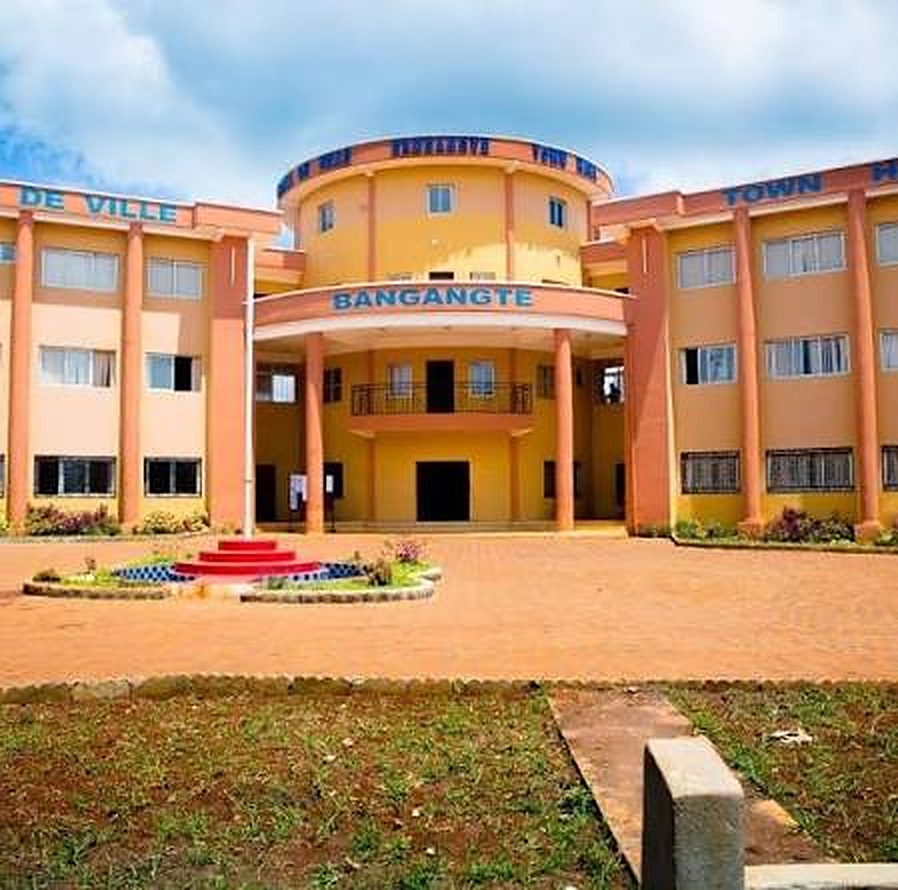
L'hôtel de ville de Bangangté
2022
2022 et après2022 and beyond

Une ville qui se transformeA changing town

Nouvel hôtel de ville, marché central, voiries rénovées et COMENGA : Bangangté prépare son avenir avec sa diaspora.A new town hall, central market, renewed roads and COMENGA: Bangangté is building its future with its diaspora.

Dynastie Mveun Nga'Mveun Nga' dynasty

Les 15 rois des BangangtéThe 15 kings of the Bangangté

Plus de trois siècles et demi de règne ininterrompu. Faites glisser pour parcourir la lignée.More than three and a half centuries of unbroken rule. Swipe to follow the line.

  1. Ngami Ier1665 – 1701
  2. Tshamngo1701 – 1706
  3. Menaton1706 – 1748
  4. Mbiatat1748 – 1780
  5. Ngassam Ier1780 – 1804
  6. Nya Ier1804 – 1805
  7. Nzike Ier1805 – 1840
  8. Nya II1840 – 1885
  9. Ngassam II1885 – 1891
  10. Yomi1891 – 1895
  11. Tchatchoua1895 – 1912
  12. Nzike II1912 – 1943
  13. Pokam Njike Robert1943 – 1974
  14. Njike Pokam François1974 – 1987
  15. Nji Monluh Seidou PokamDepuis 1987Since 1987

La communeThe council

Les maires de BangangtéThe mayors of Bangangté

Créée en 1954, la commune est dirigée par des administrateurs jusqu'en 1961, puis par des maires dont plusieurs sont devenus des figures nationales.Created in 1954, the council was run by administrators until 1961, then by mayors, several of whom became national figures.

Toutes les personnalitésAll notable people
Marcel Niat Njifenji
2002 – 20072002 – 2007

Marcel Niat Njifenji

Ingénieur, devenu le premier président du Sénat du Cameroun.An engineer who became the first President of the Senate of Cameroon.

Célestine Ketcha Courtès
2007 – 20182007 – 2018

Célestine Ketcha Courtès

Puis ministre de l'Habitat et du Développement urbain.Then Minister of Housing and Urban Development.

  • Jonas Kouamouo

    2019 – 20212019 – 2021

    Pharmacien et enseignant à l'Université des Montagnes.Pharmacist and lecturer at the Université des Montagnes.

  • Éric Niat

    Depuis mai 2021Since May 2021

    Fils de Marcel Niat Njifenji, il a inauguré le nouvel hôtel de ville en 2022.Son of Marcel Niat Njifenji, he opened the new town hall in 2022.

Les maires précédentsEarlier mayors

  • Paul Nana

    1961 – 1978

  • Émile Ngoumgnia Kamgoum

    1978 – 1980

  • François Yanzeu

    1980 – 1982

  • Jacques Alimoka

    1982 – 1983

  • Thomas Léoué Yetenje

    1984 – 1987

  • Jean-Claude Tzeuton

    1987 – 1995

  • Jean-Calvin Djeudam

    1995 – 1996

  • Thomas Tchatchoua

    1996 – 2002